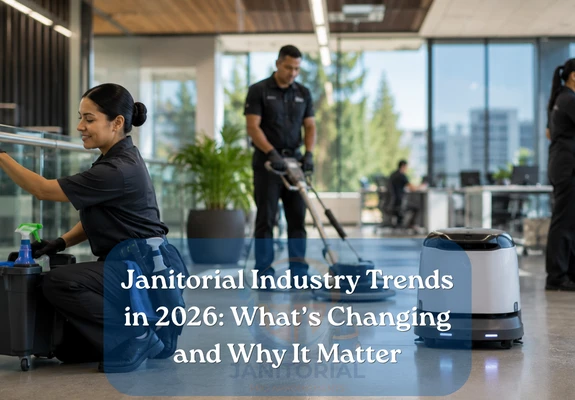
Clients expect more. Labor is harder to find. Technology that used to belong to large national contractors is now accessible to small and mid-size cleaning companies. And the businesses that are growing in 2026 are the ones paying attention to what is shifting — not the ones waiting for things to go back to normal.
Here is what is actually changing, backed by 2026 market data.
The Market in 2026: How Big and Where It Is Going
The numbers tell a clear story.
The global janitorial services market reached $314 billion in 2026 and is projected to grow steadily through 2035. In the US alone, the janitorial services market is worth $112 billion, with over one million cleaning businesses operating as of 2026.
What is driving that growth:
- Around 78% of organizations now outsource cleaning services to reduce operational costs and improve hygiene compliance
- Over 75% of organizations have increased cleaning frequency since 2020
- 73% of cleaning business owners expect revenue growth in 2026
💡 Pro Tip: If you are still positioning your cleaning business as a commodity service competing purely on price, 2026 is the year to change that. The companies growing fastest are differentiating on reliability, technology, and specialized expertise — not the lowest bid.
Trend 1: Robotics and Automation Are Going Mainstream
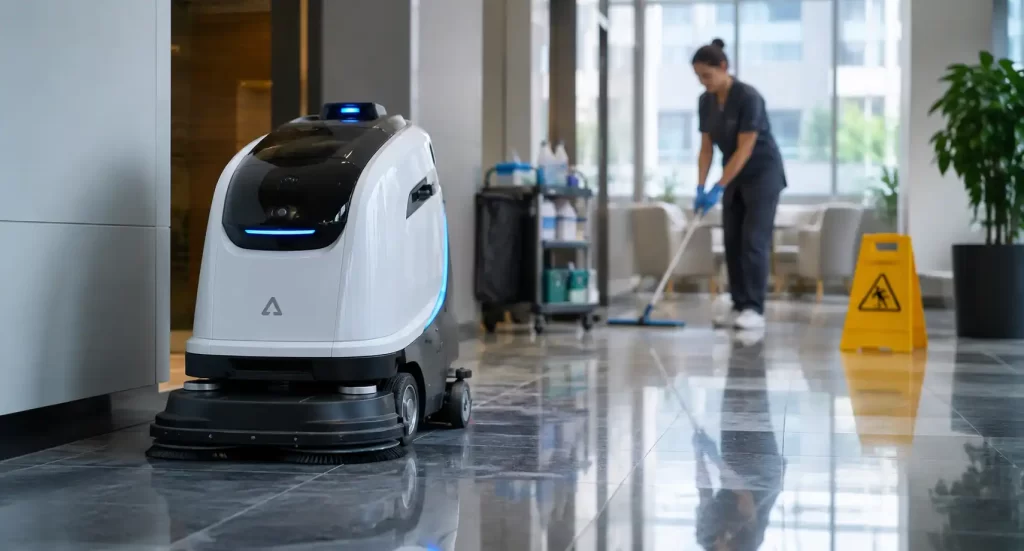
Cleaning robots are no longer a novelty for airports and shopping malls. They are moving into mid-size commercial facilities — and the numbers behind the shift are significant.
The global cleaning robot market is valued at $21.15 billion in 2026, growing at approximately 17% annually. Over 45% of janitorial companies globally have adopted automated cleaning tools such as robotic vacuums and floor scrubbers, reporting efficiency gains of up to 25%.
What robots do well: – Repetitive floor scrubbing and vacuuming in large open spaces – Mapped route cleaning in warehouses, schools, and airports – Consistent coverage in predictable, low-obstacle environments
What robots cannot replace: – Restroom cleaning and restocking – Odor detection and spill response – Judgment-based tasks — stains, broken fixtures, client complaints – Any space with irregular layout or daily changes
The future of robotic cleaning is hybrid. The strongest janitorial teams will use automation for routine floor work and people for detailed, judgment-based cleaning.
💡 Pro Tip: You do not need to own a robot to benefit from this trend. Robot rental and service partnerships are emerging for smaller operators. Knowing how to position hybrid service models in proposals can help you win larger facility contracts that competitors without this capability cannot pitch.
Trend 2: AI-Powered Scheduling Is Replacing Spreadsheets
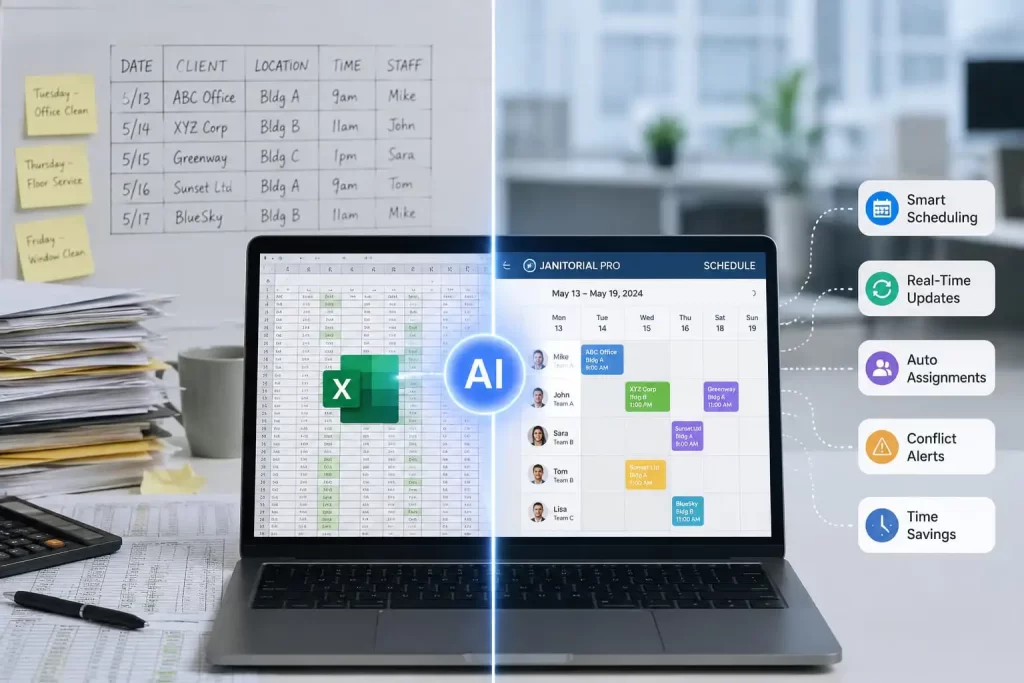
Manual scheduling is becoming a competitive disadvantage for cleaning businesses in 2026.
AI scheduling tools now predict accurate job time slots from historical data, auto-reassign staff when someone calls in sick, optimize routes based on real-time traffic, and match cleaning staff to accounts based on performance history.
The practical result: Less overtime, fewer missed visits, tighter route density, and more jobs completed per shift without adding headcount.
62% of cleaning service bookings are now made through mobile apps and online platforms. Clients increasingly expect digital communication, online invoicing, and real-time job tracking as standard — not premium features.
⚠️ Warning: If you are still managing your schedule in a spreadsheet or paper log, you are already behind the clients who will start asking about your systems during vendor evaluation. Job management software like Jobber, Swept, or ZenMaid has become table stakes for professional commercial cleaning companies in 2026.
Trend 3: Green Cleaning Is Now a Contract Requirement
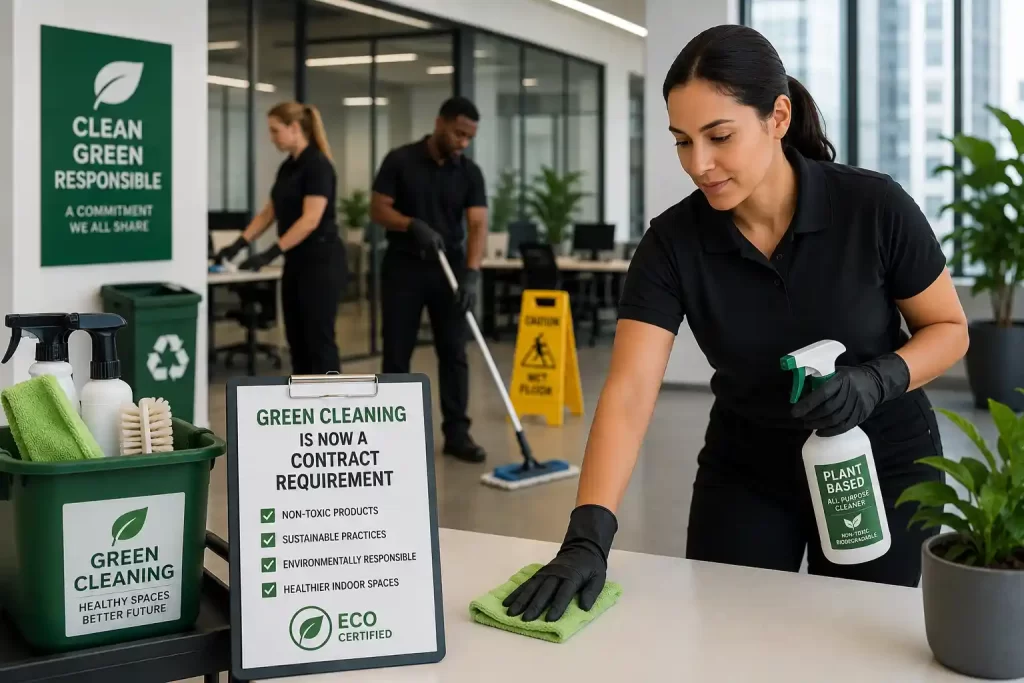
Sustainable cleaning is no longer a differentiator. For a growing number of commercial clients, it is a minimum requirement.
Over half of the market has shifted to sustainable products in 2026. Green cleaning is now table stakes. Green cleaning practices are adopted by nearly 42% of service providers globally, with eco-friendly product usage reaching 48%.
What clients are actually asking for:
- EPA-registered, low-VOC disinfectants and cleaning chemicals
- Microfiber systems that reduce chemical and water usage
- Documented green cleaning protocols — especially for LEED-certified buildings
- Vendors who can show supply chain transparency on product ingredients
The global eco-friendly cleaning products market is expected to reach $115 billion by 2033. Corporate sustainability goals are directly shaping procurement decisions — and cleaning vendors who cannot align with those goals are increasingly passed over regardless of price.
💡 Pro Tip: Green cleaning certification through organizations like ISSA or Green Seal costs less than most people think and opens doors to corporate and institutional accounts that require it. If you clean or plan to clean LEED-certified buildings, government facilities, or healthcare accounts, getting certified before your competitors in your market is a real advantage.
Trend 4: Labor Shortages Are Reshaping How Companies Operate
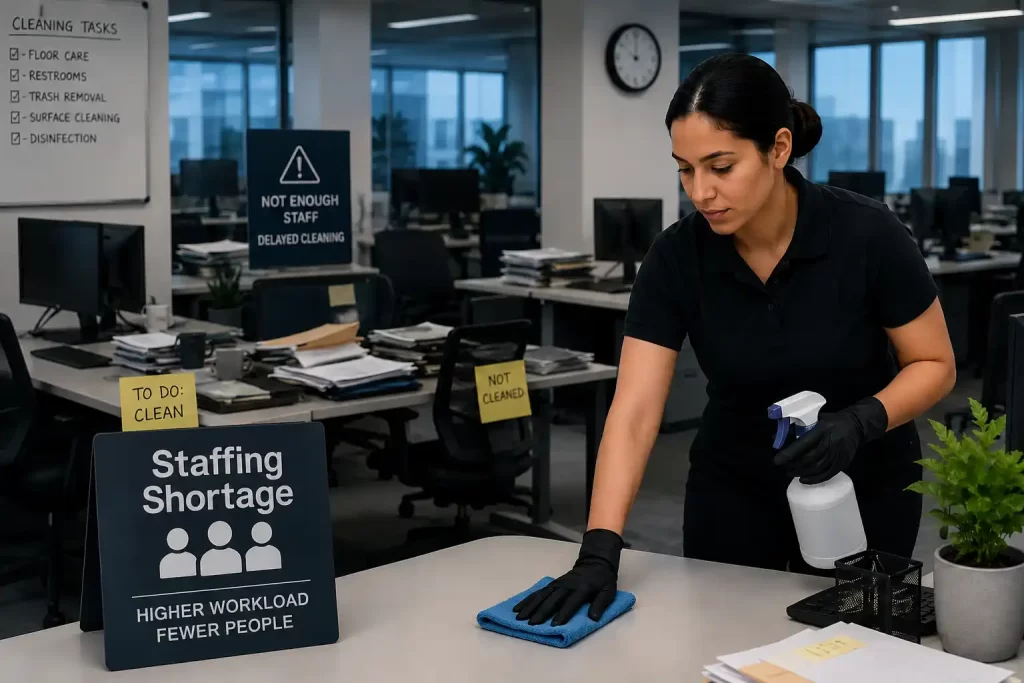
Finding and keeping reliable cleaning staff is the biggest operational challenge facing janitorial businesses in 2026 — not lack of demand.
40% of cleaning businesses cite staffing as their primary constraint in 2026. The market is growing, but labor is the bottleneck, not demand. The US Bureau of Labor Statistics projects approximately 351,300 annual openings for janitors and building cleaners each year from 2024 to 2034.
55% of cleaning businesses raised prices in the last 12 months — and labor cost is the primary driver. US wages in the cleaning industry are up 8 to 12% compared to pre-2023 levels.
How leading cleaning companies are responding:
- Investing in staff retention — consistent hours, reliable pay, clear advancement paths
- Using scheduling software to reduce overtime and unnecessary travel time between jobs
- Building route density so staff spend less time driving and more time cleaning
- Cross-training employees across multiple account types to improve flexibility
⚠️ Warning: Competing on price while facing rising labor costs is a path to collapse. The cleaning businesses surviving labor pressure in 2026 are raising rates, improving retention, and using technology to do more with the staff they have — not cutting corners on wages to hold margins.
Trend 5: Clients Want Data, Not Just Clean Floors
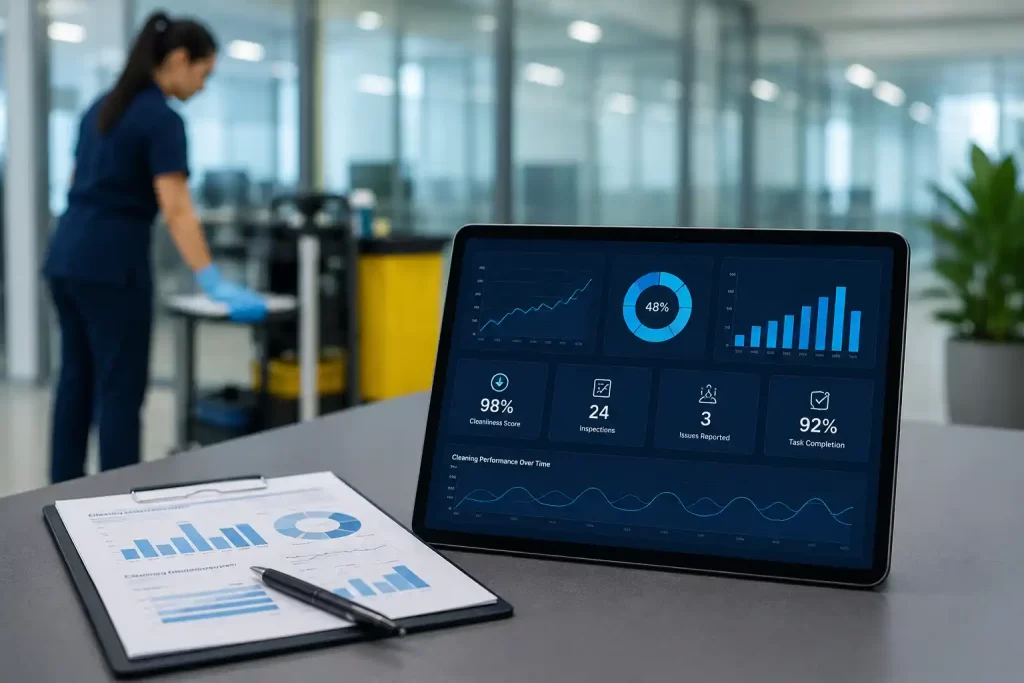
Accountability is the new baseline expectation for commercial cleaning clients.
Technology is providing clients with greater transparency through reporting dashboards and performance tracking systems, enhancing accountability and customer satisfaction. IoT-enabled cleaning systems are now used in 30% of commercial facilities.
What modern clients expect:
- Digital job completion verification — time-stamped check-ins, photo documentation
- Monthly performance reports — what was cleaned, what was flagged, what was resolved
- Real-time communication on issues — not a voicemail two days later
- QR-code-based inspection systems in restrooms and high-traffic zones
This shift is coming from facility managers who have been burned by cleaning vendors who looked good on paper and delivered inconsistently. Data removes the ambiguity and protects both parties.
💡 Pro Tip: You do not need enterprise software to deliver this. A simple monthly report summarizing tasks completed, issues flagged, and response times sent via email positions you ahead of most competitors who still rely on a handshake and hope.
Trend 6: Specialized Niches Are Pulling Away from Commodity Cleaning
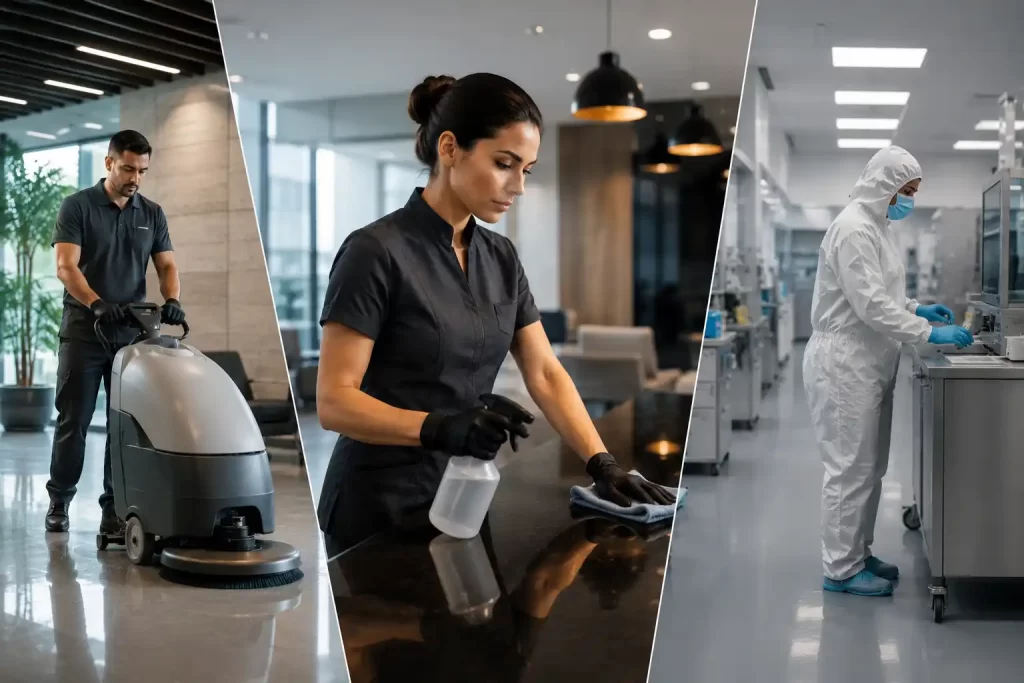
The janitorial industry is splitting in two. Market analysts predict the industry will bifurcate into a commodity segment characterized by price competition and labor substitution, and a premium segment where technical expertise and compliance capabilities command sustained margin premiums.
The high-margin niches pulling ahead:
- Healthcare and medical facilities — OSHA and CDC compliance, EPA-registered disinfectants, strict documentation requirements — and rates 50 to 100% higher than standard office cleaning
- Data centers and semiconductor facilities — contamination control, cleanroom protocols, high security requirements — premium rates and long-term contracts
- Post-construction cleanup — one-time high-ticket jobs with strong margins and no long-term labor commitment
- Green and LEED-certified building cleaning — growing corporate demand, higher willingness to pay, lower price sensitivity
ABM Industries, one of the largest facility services companies in the US, is actively pivoting from commodity janitorial contracts to high-margin technical cleaning where specialized training and compliance create entry barriers. Small cleaning companies that specialize early will find less competition and stronger pricing power in these same verticals.
💡 Pro Tip: Pick one specialized niche and invest in the training and certification it requires before you need it. The entry barriers that seem like obstacles are exactly what keep competitors out once you are inside.
CONCLUSION
What This Means for Your Cleaning Business
Six trends. One clear message.
The janitorial businesses that will grow in 2026 and beyond are not necessarily the ones with the most clients right now. They are the ones investing in technology, specializing in higher-value niches, holding on to good staff, and giving clients the data and transparency they now expect as standard.
The commodity middle — average service, average price, no differentiation — is getting squeezed from both ends. Technology and specialization are pulling the top up. Price competition is pushing the bottom down.
Know where you want to be. Then build toward it.
Ready to fill your calendar with pre-qualified commercial cleaning appointments? Janitorial Pro Appointments connects cleaning businesses across the US with verified, ready-to-book leads. Contact us today.